GLOW Peptide Research: Mechanisms and Findings by Constituent
GLOW Peptide Research Overview
The GLOW peptide literature is organized across three independent bodies of evidence — one for each constituent. GHK-Cu has been studied since 1988, with over two dozen publications covering collagen stimulation, wound closure, skin aging, pulmonary fibrosis, colitis, hair growth, and cognitive aging. BPC-157 has over thirty preclinical studies across tendon, ligament, muscle, gut, and neurological tissue models. TB-500's parent protein, thymosin beta-4, has reached Phase II clinical trials in humans for cardiac, corneal, and wound-healing endpoints.
No study has tested the combined GLOW blend as a single compound. This site reports constituent evidence only. Where the three mechanisms overlap — angiogenesis, extracellular matrix remodeling, anti-inflammatory signaling — the convergence is noted. Where the evidence is absent, that absence is named.
GHK-Cu (Copper Peptide): The Collagen and Repair Constituent
GHK-Cu stimulated collagen synthesis in cultured human fibroblasts in a dose-dependent manner, with stimulation beginning at 10⁻¹² to 10⁻⁹ M — an effect independent of cell number changes, indicating direct upregulation of collagen gene expression rather than simple proliferation [1]. In a subsequent genomic analysis, GHK modulated expression of approximately 31.2% of human genes at a ≥50% change threshold: stimulating 1,569 genes and suppressing 583, including upregulation of 47 DNA-repair genes, 41 ubiquitin-proteasome genes, and 408 neuronal genes [2].
In aged mouse fibroblasts (24-26 months), GHK reduced cellular senescence markers p21 and p53 while increasing stemness markers p63 and PCNA — effectively reversing the age-related fibroblast phenotype in cell culture via integrin-beta1 signaling [22]. Human plasma GHK declines from approximately 200 ng/mL at age 20 to below 60 ng/mL by age 60 [22], a trajectory that positions GHK-Cu as an age-declining endogenous regulator of matrix maintenance.
For skin-specific outcomes: in a 12-week facial study with 71 women aged 50-59, topical GHK-Cu improved skin laxity, firmness, and reduced fine and coarse wrinkles; a separate eye-area study with 41 women increased skin thickness and density versus placebo; and procollagen synthesis in dermal papillary fibroblasts was achieved in 70% of 20 volunteers treated with GHK-Cu — outperforming vitamin C (50%) and retinoic acid (40%) in the same study [23].
In a 6-month randomized double-blind hair growth trial (n=45 males), a topical GHK-Cu formulation (ALAVAX) at 50 mg/mL added +71.5 hairs in a 1 cm diameter area (p<0.05), versus +9.6 hairs in controls [5]. In a 2025 infected-wound model, a GHK-Cu hydrogel achieved >95% wound closure in mice at day 12 versus approximately 65% in untreated controls; HUVEC scratch closure reached 60.4% at 48 hours [7].
How does GHK-Cu work in the GLOW blend? GHK-Cu simultaneously stimulates collagen and extracellular matrix synthesis, modulates matrix metalloproteinases MMP-2 and their inhibitors TIMP-1/TIMP-2, suppresses pro-fibrotic TGF-beta1/Smad2/3 signaling, and reduces TNF-alpha-induced IL-6 in dermal fibroblasts [3]. Its NF-kB suppression and SIRT1/STAT3 pathway modulation have also been demonstrated in a 2025 colitis model [6]. The copper coordination itself delivers copper safely to lysyl oxidase for collagen and elastin cross-linking.
BPC-157: The Tissue Repair Constituent of GLOW
BPC-157 is a 15-amino-acid stable pentadecapeptide derived from human gastric juice protein. Its tissue-repair record across preclinical models is broad — burns, tendon, ligament, anastomosis, muscle, and neural tissue — and its primary mechanisms run through VEGFR2-Akt-eNOS signaling for angiogenesis and GHR-JAK-STAT signaling for fibroblast proliferation.
In burn models (20% BSA burns in rats), BPC-157 at 10 mcg/kg and 10 ng/kg accelerated collagen development, granulation tissue formation, angiogenesis, re-epithelialization, and tensile strength across intraperitoneal, per-oral, and topical routes — demonstrating route-independent activity at microgram-to-nanogram dosing [8].
In tendon fibroblast culture, BPC-157 increased GHR expression up to sevenfold at 0.5 mcg/mL over three days, and subsequent growth hormone application activated JAK2 phosphorylation and increased PCNA-positive cell proliferation — a mechanism that directly amplifies fibroblast response to endogenous growth hormone [9].
How does BPC-157 contribute to the GLOW blend? BPC-157's VEGFR2-Akt-eNOS axis drives vascular ingrowth in healing tissue. Its GHR upregulation in fibroblasts amplifies the local repair response. In a 2025 quadriceps reattachment study, BPC-157 at 10 mcg/kg per-oral produced complete functional recovery in rats with surgically detached quadriceps — ultrasonic imaging confirmed muscle reattachment by days 21-28, Sirius red staining showed mature type I collagen organization, and untreated controls showed permanent disability [10]. In intestinal anastomosis models, BPC-157 achieved 2-3x higher colocolonic anastomosis tensile strength and reversed lethal esophagogastric anastomosis at equimolar microgram-nanogram doses via both intraperitoneal and oral routes [11].
In terms of neuroprotective breadth, BPC-157 has counteracted dopamine-neuron destruction, serotonin syndrome signs, and carotid-artery-occlusion stroke markers in rodent models — effects attributed to VEGFR2-Akt-eNOS and Src-Caveolin-1-eNOS pathways with collateral vascular recruitment [12].
How does BPC-157 contribute to the GLOW blend specifically? Within the three-peptide system, BPC-157 is the injury-specific repair constituent — it responds to tissue-damage signals and drives both vascular and fibroblast responses. Its breadth across tissue types (tendon, gut, muscle, neural) makes it the versatile recovery anchor of the stack.
TB-500: The Recovery Constituent of GLOW
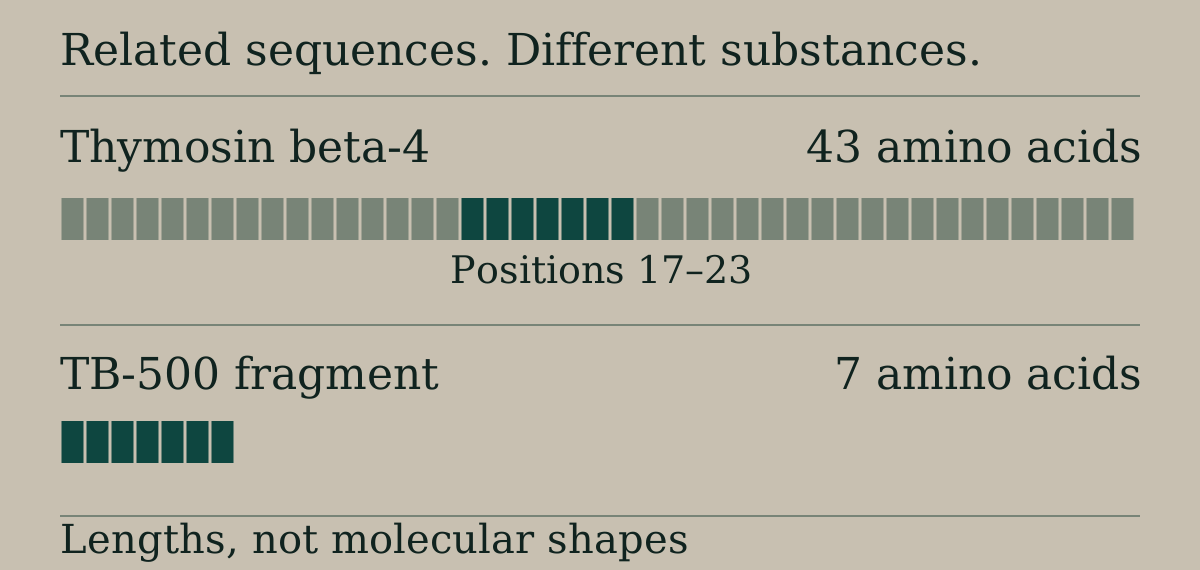
TB-500 is the synthetic active fragment of thymosin beta-4 — the heptapeptide Ac-LKKTETQ, amino acids 17-23 of the full 43-amino-acid protein. This fragment carries the actin-sequestration activity responsible for cell migration and wound healing [20].
How does TB-500 contribute to the GLOW blend? TB-500 sequesters G-actin (monomeric actin), preventing F-actin polymerization and enabling the cytoskeletal reorganization that cells require to migrate into wound tissue. It upregulates VEGF in endothelial progenitor cells, promotes PI3K/Akt/eNOS-mediated angiogenesis, inhibits NF-kB by blocking IkB phosphorylation (reducing TNF-alpha, IL-1beta, IL-6), and activates Wnt/beta-catenin signaling for hair follicle and progenitor cell development [17]. In muscle injury models, thymosin beta-4 mRNA was specifically upregulated in early-stage regenerating fibers in mice; both native and sulphoxized TB-500 accelerated wound closure and C2C12 myoblast chemotaxis — confirming TB-500 as a chemoattractant that recruits muscle satellite cells to injury sites [16].
In dystrophin-deficient mdx mice, chronic TB-500 (150 mcg twice weekly for 6 months IP) significantly increased the number of skeletal muscle regenerating fibers versus untreated controls — demonstrating regenerative effect but no improvement in fibrosis or cardiac function in that specific model [19].
The clinical record for thymosin beta-4: a Phase II randomized controlled trial for dry eye showed 35.1% reduction in ocular discomfort and 59.1% reduction in corneal staining versus placebo; a clinical wound trial in 143 pressure/venous ulcer patients accelerated healing by approximately one month; a Phase II cardiac trial in AMI patients confirmed cardioprotection and reduced scar volume [17]. These trials used full-length thymosin beta-4, not the isolated TB-500 fragment — clinical equivalence between the fragment and the full protein has not been established.
The Phase I first-in-human study of recombinant human thymosin beta-4 (NL005, n=84 healthy volunteers) found no dose-limiting toxicities or serious adverse events across IV doses from 0.05-25.0 mcg/kg, single and multiple (10-day) dosing — terminal half-life 0.5-2.08 hours, minimal immunogenicity [18].
GLOW Peptide Before and After: Outcomes in Research Models
Across preclinical models, the outcomes across GLOW constituents follow a consistent timeline: cellular and molecular changes appear within days; tissue-level outcomes in rodent repair models emerge over 1-4 weeks.
GHK-Cu: collagen stimulation in fibroblasts is measurable within the first days of cell-culture exposure [1]; in the 2025 infected wound model, the GHK-Cu hydrogel diverged from controls by day 12 [7]; the 6-month hair growth trial reached statistical significance at endpoint [5].
BPC-157: in burn models, the trajectory toward improved collagen deposition and tensile strength develops across 2-3 weeks depending on the model; in the quadriceps reattachment model, walking recovery was measurable at day 21, full reattachment confirmed at day 28 [10].
Aged fibroblast reversal: GHK reduced senescence markers and restored fibroblast migration in 24-26-month-old mouse fibroblasts in culture — a finding that maps the 'before' state to aged, fibrotic tissue and the 'after' state to a younger, more proliferative phenotype via integrin-beta1 signaling [22].
The human 'before and after' in skin: the 12-week double-blind topical trials showed measurable improvements in skin density, laxity, and wrinkle depth with GHK-Cu — quantified in 41-71 participant studies versus placebo [23]. No comparable before-after data exists for injectable GHK-Cu, and none for the combined GLOW blend.
GLOW Peptide Side Effects: Tolerability in Preclinical Studies
What are the side effects of GLOW peptide injections? Across the individual constituent literature, serious adverse findings are rare at studied doses.
GHK-Cu: no adverse events reported in the 6-month topical hair growth trial (n=45) [5]; pulmonary fibrosis mouse studies reported no toxicity signals at doses of 2.6-260 mcg/mL alternating-day IP [4]. No human pharmacokinetic study for systemic GHK-Cu injection has been published.
BPC-157: formal pharmacokinetic studies in rats and dogs found no toxicity findings at doses from 20-500 mcg/kg IV or IM [14]. A 2026 comprehensive review confirmed no major adverse effects in limited human pilot studies for musculoskeletal pain and interstitial cystitis via IV — with the specific limitation that preparation standards are inconsistent and no approved human therapeutic indication exists [13].
TB-500 (thymosin beta-4): the Phase I human study (n=84) found all adverse events to be mild to moderate, no serious adverse events, no dose-limiting toxicities, and no accumulation over 10-day continuous IV dosing [18].
Injection-site burning, commonly reported in user accounts, is attributed to formulation variables — pH, osmolarity, and peptide concentration relative to BAC water volume — rather than specific peptide toxicity noted in preclinical literature. This has not been studied formally for the GLOW blend.
Regulatary context: BPC-157 was rejected by FDA for compounding pharmacy use in 2022, classified as lacking sufficient safety data for human use. BPC-157 and TB-500 are prohibited under WADA S0 at all times; GHK-Cu is not on the 2026 WADA Prohibited List. Long-term systemic human safety data for any of the three constituents is absent from peer-reviewed literature as of 2026.
GLOW Peptide vs. Single-Peptide Protocols: Rationale for Blending. Each GLOW constituent targets a distinct phase of the repair cascade: GHK-Cu rebuilds and remodels matrix structure, BPC-157 orchestrates the injury-specific fibroblast and vascular response, and TB-500 recruits muscle satellite cells and drives angiogenesis. Single-peptide protocols address one axis at a time; the blend targets all three simultaneously. No published trial has tested whether the combination is additive, synergistic, or antagonistic — the stacking rationale is mechanistic inference from individual-constituent data.
Does GLOW Peptide Really Work? Each constituent has published peer-reviewed evidence for distinct biological effects in preclinical models: GHK-Cu for collagen induction [1][23], BPC-157 for tendon and muscle repair [9][10], TB-500 for angiogenesis and muscle recovery [15][16]. No randomized controlled trial has studied the combined GLOW blend as of 2026.
GLOW Peptide Timeline: When Do Effects Appear in Studies? GHK-Cu collagen marker changes appear within days in fibroblast culture [1]; tissue-repair endpoints in BPC-157 and TB-500 rodent models typically reach significance at 2-4 weeks [10][16].
GLOW Peptide Results: Outcomes Observed in Research. Quantified outcomes across the literature: >95% infected wound closure in GHK-Cu hydrogel model at day 12 [7]; full quadriceps muscle reattachment in BPC-157-treated rats by day 28 [10]; 2-3x higher anastomosis tensile strength in BPC-157 intestinal models [11]; +71.5 hair count in 6-month GHK-Cu RCT [5]; 35.1% dry-eye symptom reduction in thymosin beta-4 Phase II trial [17].